





Receive for Free - Discover & Explore eNewsletter monthly with advance notice of special offers, packages, and insider savings from 10% - 30% off Best Available Rates at selected hotels. 
history
Discover Orient Express Venezia at Palazzo Donà Giovannelli, which was once the home for prominent Italian nobles, including Francesco Maria I Della Rovere, the Duke of Urbino.

Orient Express Venezia at Palazzo Donà Giovannelli, a member of Historic Hotels Worldwide since 2026, dates to the 15th century.
VIEW TIMELINELocated in the historic Cannaregio district, Orient Express Venezia at Palazzo Donà Giovannelli can trace its origins back to the 15th century, when its construction unfolded under the influence, if not the direct architectural mind, of Filippo Calendario. (Calendario was the same architect associated with the Doge’s Palace, as well as one of the visionaries who helped articulate the wider architectural spirit of the Venetian Republic.) Built in 1436, the palace became the residence for significant noble families, its story reflecting the political and economic tides that swept through Venice’s Renaissance era. These families inhabited the palace amid the years when Venice remained a crossroads of power, art, and diplomacy. Their presence shaped the building’s evolving character, filling it with the layered memories that form the heart of its contemporary identity.
By 1538, the palace belonged to Francesco Maria I Della Rovere, the Duke of Urbino, who connected the building to the broader web of Italian nobility. It then passed to Giovanni Battista Donà, although mounting debts would force him to relinquish the mansion to the rival Giovannelli family. The Giovannellis in turn would leave their name imprinted on the structure for centuries thereafter, becoming remembered as the “Palazzo Donà Giovannelli.”
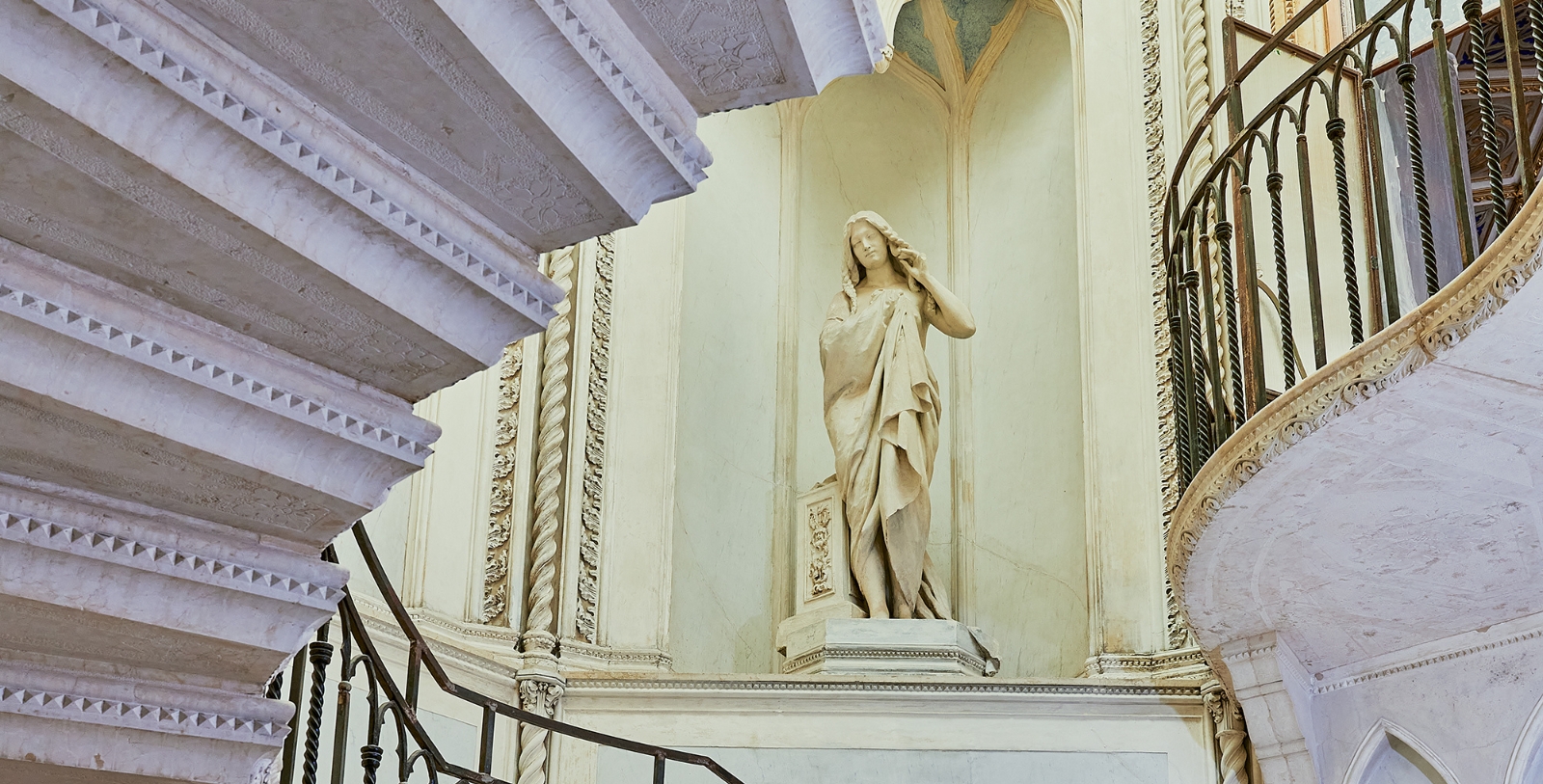
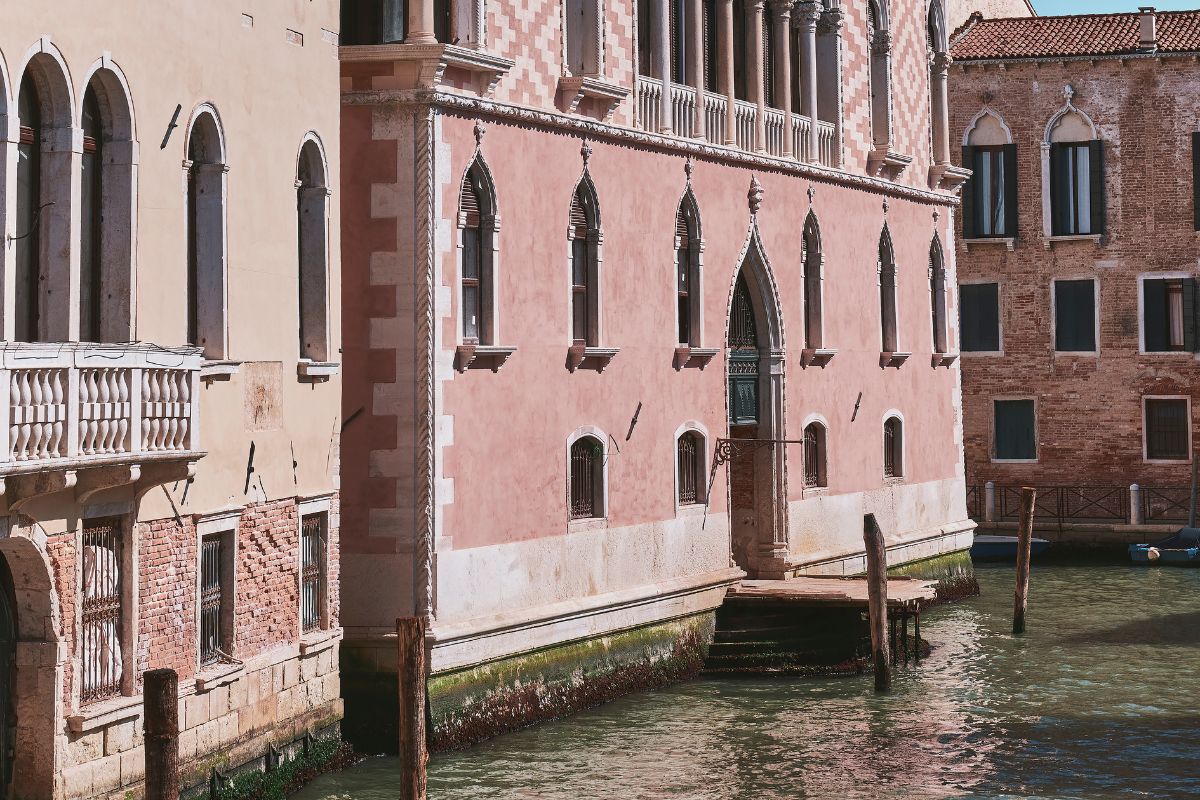
Architect Giovanni Battista Meduna eventually undertook a sweeping renovation that altered the site significantly during the mid-19th century. Respected for his influence on the Ca’ d’Oro and Venice’s famed La Fenice theatre, Meduna introduced a wealth of new features to the building. Neo-Gothic and late-Renaissance aesthetics debuted in each apartment, replacing the more traditional, vernacular motifs that had long defined the layout. Behind the façades, the interiors displayed an eccentric arrangement atypical of many neighboring palaces. Rather than the standard central portego, a lengthy hallway that divided the main floor, the area consisted of smaller chambers that led toward richly decorated corridors. Stucco work, carved chests, and elaborate fireplaces brought the palace an element of curated splendor, as though every room conveyed a different aspect of Venetian culture. The courtyard, accessed through a monumental entrance, completed the building’s breathtaking appearance, as did a series of seven Gothic-inspired windows that proliferated across the exterior. Even great works of art, including Giorgione’s The Tempest, resided inside the Palazzo Donà Giovannelli, further reinforcing its sense of grandeur.
By 1538, the palace belonged to Francesco Maria I Della Rovere, the Duke of Urbino, who connected the building to the broader web of Italian nobility. It then passed to Giovanni Battista Donà, although mounting debts would force him to relinquish the mansion to the rival Giovannelli family. The Giovannellis in turn would leave their name imprinted on the structure for centuries thereafter, becoming remembered as the “Palazzo Donà Giovannelli.”
Architect Giovanni Battista Meduna eventually undertook a sweeping renovation that altered the site significantly during the mid-19th century. Respected for his influence on the Ca’ d’Oro and Venice’s famed La Fenice theatre, Meduna introduced a wealth of new features to the building. Neo-Gothic and late-Renaissance aesthetics debuted in each apartment, replacing the more traditional, vernacular motifs that had long defined the layout. Behind the façades, the interiors displayed an eccentric arrangement atypical of many neighboring palaces. Rather than the standard central portego, a lengthy hallway that divided the main floor, the area consisted of smaller chambers that led toward richly decorated corridors. Stucco work, carved chests, and elaborate fireplaces brought the palace an element of curated splendor, as though every room conveyed a different aspect of Venetian culture. The courtyard, accessed through a monumental entrance, completed the building’s breathtaking appearance, as did a series of seven Gothic-inspired windows that proliferated across the exterior. Even great works of art, including Giorgione’s The Tempest, resided inside the Palazzo Donà Giovannelli, further reinforcing its sense of grandeur.
The palace’s fortunes shifted again at the start of the 21st century as it had caught the attention of Orient Express, a brand name synonymous with romance, travel, and the golden age of luxury. Following years of meticulous restoration under architect and interior designer Aline Asmar d’Amman, the building began its transformation to provide an immersive hotel experience. Her approach honored the interplay of mosaics, frescoes, and Murano glass accents that had been installed over the centuries. Now known as the “Orient Express Venezia at Palazzo Donà Giovannelli,” this fascinating historic palace has reemerged as a celebrated icon in the heart of Venice. Guests arriving by private boat today can glide through the same 15thcentury Gothic portal once known strictly to Venetian nobility, entering a world where theatrical splendor meets poetic intimacy. Light pours into vaulted rooms; frescoes and mosaic floors represent their original appearance; and the spirit of Venice—its artistic flair, layered history, and tranquil elegance—permeates through every passageway. In its rebirth as Orient Express Venezia, the ancient residence has within its walls the memories, cultures, and eras of Venezia.
-
About the Location +
Located inside the famed Venetian Lagoon, Venice is a magnificent city defined by its fascinating history. Visitors from throughout the world find its countless turquoise canals and unique brand of Italian architecture to be incredibly enchanting. A lack of readily available historical records has unfortunately made it difficult to determine exactly how Venice first came into existence, although many oral traditions present a number of interesting theories. Some origin stories claim that the first Venetians were refugees escaping the Trojan War, while others insist that the city emerged as a local hideout from barbarians amid the fall of the Roman Empire. Nevertheless, Venice became an important Mediterranean seaport within Byzantium, a Roman successor state based out of the ancient metropolis of Constantinople (now Istanbul). Despite their distance from the Adriatic Sea, the Byzantines managed to control the settlement via the Exarchate of Ravenna. Yet, the rulers in Ravenna often concerned themselves with other matters and allowed an appointed official called the “Dux” or “Duke” to handle affairs on their behalf. The Venetian “Dux” eventually became the more recognizable “Doge” after the city achieved a significant level of autonomy following the Lombard conquest of Ravenna in the 8th century. Over time, the Doge emerged as an elected office, with candidates selected from Venice’s leading merchant families. The Doge’s role in Venetian society became less dictatorial, too, as future generations of aristocrats instituted political checks and balances as their councilors.
Venice prospered over the next few centuries, becoming one of Europe’s most commercially affluent trading centers by the height of the Middle Ages. Its situation within the Mediterranean basin made it easy for Venetian merchants to trade with Byzantium, as well as the many Islamic kingdoms that resided in North Africa and the Middle East The city became a hub for the influx of exotic goods, traveling from places as far away as China along the legendary Silk Road. Venice’s great wealth made it immensely powerful, both in terms of money and military might. In fact, Venice had grown so strong that the city was able to obtain its freedom from the Byzantines in 1082, with their former overlords even requesting the use of its now-formidable navy. But the true peak of Venice’s influence occurred in the wake of the Fourth Crusade, when Venice seized many of the eastern landholdings of the Byzantine Empire. The Venetians had agreed to ferry an army of Crusaders to Egypt as part of a grander strategy by Pope Innocent III to reconquer Jerusalem. But when the Crusaders could not pay their way across the sea, the Venetians struck a deal in which the knights would attack their enemies. First striking Zara (an area the Venetians lost to one of their rivals, the Kingdom of Hungary), the Crusaders eventually arrived off the coast of Constantinople to exact revenge against a deposed Byzantine emperor who had failed to pay his own debts. Sacking the city in 1204, the Venetians stormed off with countless riches, as well as more territorial gains across the Aegean Sea.
Now a major continental power, the Venetians proceeded to conquer rival Italian city-states, culminating with their defeat over the Genoans during the 14th century. At its apex, the Venetian empire even included large swathes of territory that currently constitutes the modern Italian province of Veneto. But Venice’s decline began soon thereafter once the Ottomans annexed the Byzantine Empire, dissolving its greatest trading partner. Furthermore, Portuguese sailors had successfully managed to navigate the Horn of Africa, enabling European mariners to bypass the Mediterranean Sea and its merchant republics. Venice’s continental landholdings began to disappear, as both the Ottoman Empire and the Papal States led victorious military campaigns that sought to erode its influence. (Venice did experience some success fighting back against its enemies, specifically the Ottomans, which it famously defeated alongside the Spanish at the Battle of Lepanto in 1571.) The historic Venetian Republic came to an ultimate end when Napoleon Bonaparte conquered the city at the beginning of the Napoleonic Wars. Looted by pro-French forces, it became a satellite of Napoleon’s new empire until his first abdication in 1814. Venice was integrated into the new Austrian Empire, before finally joining the modern Italian state in the 1860s amid the Wars of Italian Unification. Venice today is one of Italy’s foremost cities, home to all kinds of manufacturing operations particularly shipbuilding. The city features many outstanding historical landmarks, like the Ponte Di Rialto, the Basilica Di San Marco, and the Palazzo Ducale (the Doge's former palace). The heart of Venice is even protected as one of the United Nation’s celebrated UNESCO World Heritage Sites.
-
About the Architecture +
Orient Express Venezia at Palazzo Donà Giovannelli features a stunning wealth of masterfully preserved Gothic architecture. Buildings designed with Gothic design principles evolved from earlier architectural forms in Europe that called for the creation of massive, beautiful structures. Architects typically recycle such features as the pointed arch, vaulted ceilings, large towers, gorgeous tracery, and ornate stained-glass windows. Yet some builders felt inspired to make those characteristics even larger and exaggerated the details in the process. To ensure that the size of the buildings remained stable, Gothic architects began employing the use of the rib vault and the flying buttress to help distribute the weight. The utilization of those features was particularly important, as the architects developed much thinner walls. Furthermore, the stained-glass windows became a cornerstone of the aesthetic, fulfilling a dual role as a source of natural light and beauty. Stone dominated as the main building material, although brick and terracotta appeared infrequently. Additional details that appeared throughout Gothic-style designs included gorgeous slender columns, as well as deeply pitched roofs lined with dormers. Although this style primarily appeared at the height of the Middle Ages, appreciation for its design principles did persist in the 15th and 16th centuries. Churches were the most widely known buildings when it came to displaying Gothic architecture, although they would also appear at palaces, universities, and guild halls. France would serve as the birthplace for Gothic architecture, defined by structures like the Reims Cathedral, the Amiens Cathedral, and most notably, the Chartres Cathedral. The form then spread throughout the rest of the continent, influencing architects in such places as the Italian Peninsula, the Iberian Peninsula, and the British Isles.
However, later renovations done to the building when it was still a palace featured Baroque-style architecture. Baroque architecture itself can trace its roots back to the start of the 17th century when French architects began to practice the style en masse. The architectural form specifically materialized in the wake of the Mannerist design aesthetics that had preceded it at the height of the Renaissance. The French had begun to mimic a new architectural school of thought that had debuted further south in the Italian Peninsula. The Vatican had grown weary of its declining influence across Europe amid the Protestant Reformation and sought innovative ways to demonstrate its cultural power. One of the many avenues that the church embraced was the use of architecture as a means of showcasing its wealth and prestige. As such, the Italian architects under its employ started creating massive structures that placed a greater emphasis on opulence and grandeur. Inspired by the movement, many European nobles incorporated similar design principles into their buildings. What made Baroque so attractive to the European aristocracy was its use of grandiose details to achieve an awe-inspiring ambiance. But the style also called for relied on symmetry, in which highly stratified floorplans granted a sense of hierarchy and order. Large ornate windows proliferated across the facade, while a brilliant wrap-around porch occasionally functioned as the main entry point. The porches would have several outstanding columns, designed to appear smooth in appearance. Every window and doorway featured decorative brackets that typically sat underneath lavish cornices and overhanging eaves. Gorgeous towers known and cupolas typically resided toward the top of the building, too.