








Receive for Free - Discover & Explore eNewsletter monthly with advance notice of special offers, packages, and insider savings from 10% - 30% off Best Available Rates at selected hotels. 
history
Discover The Griswold Inn, which stands as one of the most historic, continuously operating inns in the United States.
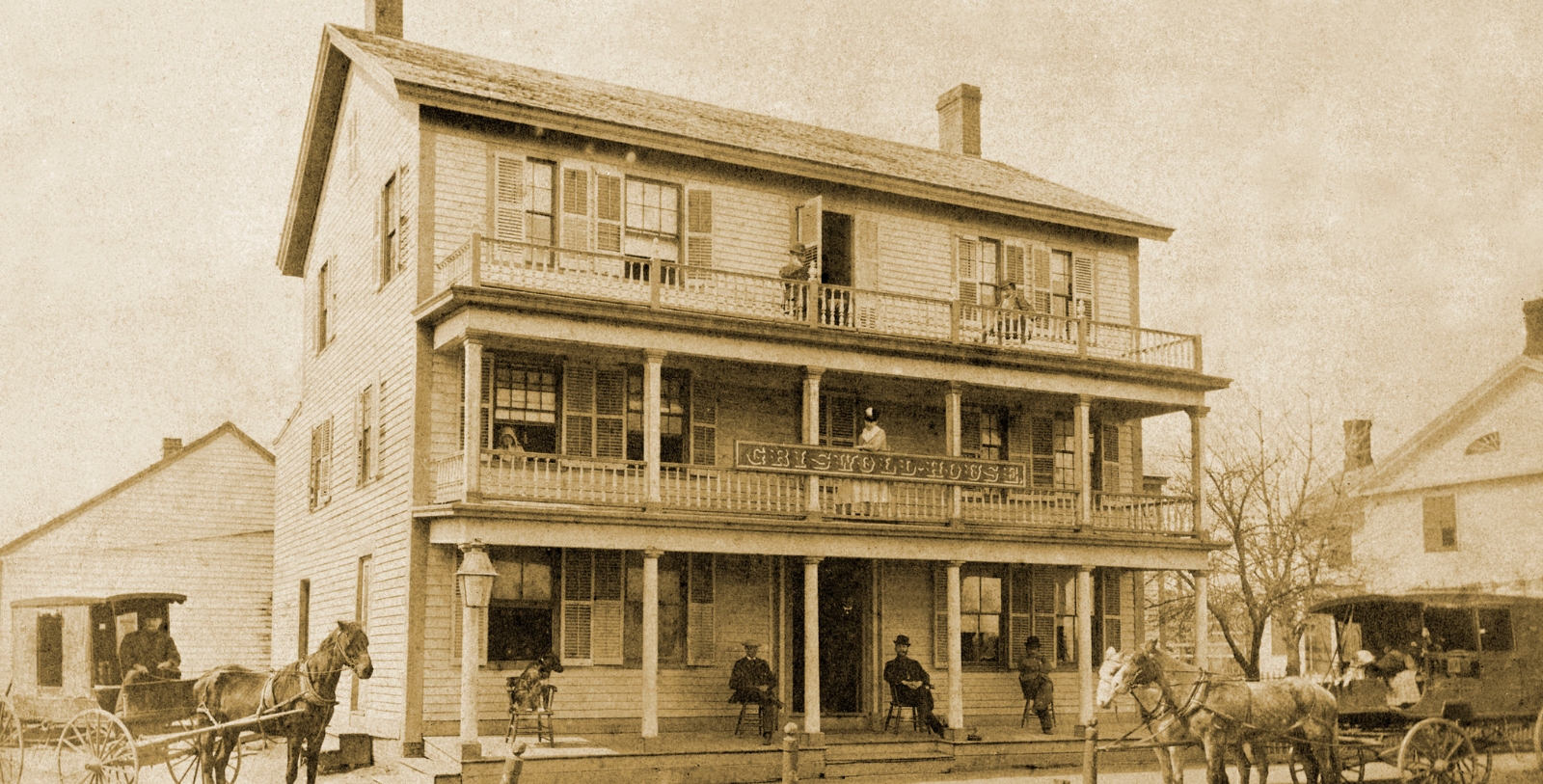
The Griswold Inn in Essex, Connecticut, is one of the most historic inns still in operation in the United States today, its story closely intertwined with the earliest chapters of the nation’s own history. Founded in 1776—the very year America declared its independence—the inn emerged amid a moment of national transformation. At the time, Essex was chosen to construct a warship known as the Oliver Cromwell under the direction of shipbuilder Uriah Hayden. The subsequent surge of laborers, tradesmen, and political envoys brought much vitality to the village. Local resident Sala Griswold in turn opened a quaint tavern near the wharf, which offered the rising number of dock workers food, spirits, and lodging. When the Oliver Cromwell finally launched that June, the inn had already secured its identity as a cornerstone of community life and an establishment born of American independence. Then one of Uriah’s relatives, Richard Hayden, acquired Griswold’s tavern and relocated it right next to his own residence along Main Street, forming the current iteration of the inn in the process. More extensions to the facility accumulated organically over the years that followed, including additional homes, outbuildings, and even the incorporation of a former 18th-century schoolhouse.
Given Essex’s proximity to the Connecticut River, economic activity surged once steamboats began to arrive in town regularly at the beginning of the 19th century. The town became an important stop between Hartford and New York, with The Griswold Inn becoming a refuge for steamboat passengers eager to find shelter. With this influx of ever more guests, the inn flourished. Travelers seeking refuge from rough waters, cold winds, or lengthy journeys downriver found the inn an inviting place to rest and exchange news. It was later known not only for its hospitality, but also its growing collection of maritime artifacts that now constitutes one of the country’s most impressive privately held assortments of marine art. The artifacts were largely amassed during the 100-year tenure of the Ladd/Lovell family, which spanned from the 1880s to 1972. But The Griswold Inn’s past also includes moments of deep national turbulence. For instance, British troops seized the inn during the War of 1812 and used it as a base of operations amid their greater attacks along the Connecticut coast. Though the occupation was temporary, it nonetheless left its mark in the form of stories passed down.
In later decades, the inn weathered additional storms. In the 1840s, activists involved in the Temperance Movement staged protests at The Griswold Inn, urging restraint in alcohol consumption. Temperance banners from these demonstrations still hang in the dining areas as reminders of an era when the inn found itself at the crossroads of a national moral and cultural debate. Ironically, less than a century later, the onset of Prohibition set the stage for another colorful period in the inn’s history. While the nation dried out, The Griswold Inn instead emerged as a favorite regional speakeasy. Its reputation as a reliable source of spirits persisted, fueled in part by rumrunners navigating the Connecticut River under cover of darkness. Federal agents raided the premises on several occasions, yet the inn managed to carry on with remarkable tenacity, reopening after multiple fines and brief shutdowns. The mid-20th century brought its own transformations, too. The Great Depression strained many historic inns, but by the 1940s, the emergence of yacht clubs and an uptick in recreational boating revived Essex’s waterfront.
The Griswold Inn became a weekend destination once again, cherished by sailors and families who arrived by water or the newly improved roadways. When the interstate was completed in the 1960s, the area experienced another burst of tourism, prompting the inn to expand into adjacent historic buildings. But through all renovations and acquisitions, the inn’s owners took care to preserve essential historical elements like the wide plank floors, the low beams, and the fireplaces big enough to warm an entire tavern room. Every corner held a story waiting to be told. The Griswold Inn continues as it always has in the present by welcoming travelers, feeding communities, and safeguarding the stories that have unfolded within its walls. Being among the most historic inns still open throughout the country, The Griswold Inn stands as a living archive of American history. This heritage of this fascinating destination reflects deep shifts in travel, commerce, culture, and community that have impacted the wider nation for generations. It has survived wars, economic upheavals, and changing tastes, yet its core identity has remained remarkably consistent: a warm refuge where people gather, share stories, and feel connected to something larger than themselves.
-
About the Location +
Essex, Connecticut, began its life in the mid‑17th century as a quiet riverside settlement carved out of the larger Saybrook Colony. In 1648, English settlers established what was then called the Potapoug Quarter, an expanse of forest, marsh, and river shoreline that drew newcomers with its fertile lands and abundant wildlife. Three early settlers, William Pratt, William Hide, and John Laywere, were among the first to claim acreage along the Connecticut River, seeking opportunity on this frontier beyond the more crowded towns to the west. Their holdings were part of a formal land division carried out by Saybrook officials on January 4, 1648, which valued the Potapoug Quarter at 2,000 distribution units and assigned shares according to social standing and colonial contribution. This system of land allocation, coupled with the river’s natural resources, created the foundation upon which a small but determined community began to grow. Over the following decades, Potapoug remained a modest outpost. Population growth came slowly, in part because Puritan civic practice required a sizable congregation before a community could establish a formal town. Despite this limitation, the settlement gradually gained permanence, attracting individuals and families who saw the promise in the region. By the mid‑1600s, the colonists built their first trading wharf in 1656, the structure located where today’s Steamboat Dock stands. The wharf marked the settlement’s earliest significant maritime link, enabling trade with the West Indies and widening the community’s economic horizon. Over time, merchants exchanged local timber and agricultural products for sugar, rum, and molasses, solidifying the area’s reputation as a budding port centered on the rhythms of the river.
As the 18th century progressed, Potapoug underwent a transformation. Shipbuilding emerged around 1733 as both an art and an industrial anchor for the area. Skilled craftsmen migrated to the riverside workshops, and families such as the Haydens established shipyards that gained renown for constructing durable, well-designed vessels. The shipyards helped shift the community’s identity from one rooted primarily in agriculture to one driven by maritime enterprises. The river became not only a transportation corridor but also a source of livelihood and social cohesion. This evolution from isolated homestead clusters to industrious riverport sets the stage for events that would eventually place Essex, then still known as Pettipaug, on the national stage. Although the American Revolution left deep marks on many coastal towns, one of the most dramatic military episodes in Essex’s history occurred during the subsequent War of 1812. On April 8, 1814, the town suffered what would become one of the most economically devastating attacks on American soil. More specifically, a British force of approximately 136 sailors and marines under the command of Richard Coote rowed up the Connecticut River under cover of darkness. Their flotilla had departed from four British warships anchored in Long Island Sound—the Hogue, Endymion, Maidstone, and Borer—and navigated six miles upriver, slipping past an unmanned fort before reaching the shore at the foot of Main Street. Armed with torches, axes, and muskets, the British quickly overwhelmed the local militia, who were caught off guard. The attacking officers refrained from harming residents or burning homes, instead focusing on destroying the vessels in the harbor. By the time the raid concluded, the British had burned twenty‑eight ships, together valued at nearly $200,000.
In the decades following the raid, Essex rebuilt its maritime infrastructure and continued to evolve. The community’s name was officially changed from its earlier designations in 1854. By then Essex had woven together three distinct villages called Essex Village, Centerbrook, and Ivoryton. Its shipyards remained active well into the 19th century, and the river continued to shape commerce, culture, and daily life. Population growth remained steady, and the legacy of craftsmanship established in the shipyards later found new expression in industries such as manufacturing and ivory processing in nearby Ivoryton. Today, Essex stands as one of Connecticut’s most historical small towns, known for its preserved streetscapes and maritime heritage. For visitors, Essex offers a rare chance to step directly into the nation’s formative years while also enjoying the contemporary experiences of a New England town. Strolling along Main Street, visitors can still sense the contours of the historic shipbuilding era in the homes, wharves, and narrow lanes that wind from the waterfront up to the front door of The Griswold Inn.
-
About the Architecture +
The Griswold Inn stands as a brilliant example of American colonial architecture. Architectural historians today generally define American colonial architecture as covering a wide berth, subdividing it into categories like First Period English, French Colonial, Spanish Colonial, and Dutch Colonial. But most professionals in the field believe that the aesthetics embraced by British colonists to be the most ubiquitous, given their widespread cultural influence during America’s infancy. It dominated the architectural tastes of most Americans at the time, until the Federalist design principles overtook them in the 19th century. The style was especially predominant in New England, which quickly saw the creation of another set of two unique subtypes—Saltbox and Cape Cod-style. A different take of English colonial architecture appeared within the southern colonies, as well, which some experts refer to as “Southern Colonial.” The building style resembled the general trends embraced by other colonists in British America, although they differed in that they constructed a central passageway, massive chimneys, and a parlor. The buildings shared strikingly similar qualities. American homes of the age were uniformly simple, and made use of either wood, brick, or stone. Rectangular in shape; they typically extended two to three stories in height. All the formal parts of the home were located on the first floor, while the family bedrooms occupied the upper levels of the building. The floorplans were also fairly limited in scope, designed to fill each level with just a couple of rooms. This simplicity was slowly modified by the arrival of Georgian-style architecture from Great Britain toward the end of the 18th century. Architects subsequently relied more upon mathematical ratios to achieve symmetry in their designs and used elements of classical architecture for ornamentation.
-
Famous Historic Guests +
Frank Sinatra, singer and actor part of the famous Rat Pack, known for selling 150 million records worldwide.
Milton Berle, American comedian and actor remembered as “Uncle Miltie” and “Mr. Television.”
Katherine Hepburn, actress known for her roles in The African Queen and Woman of the Year.
Paul Newman, actor known for his roles in such films like Cool Hand Luke, The Sting, and Butch Cassidy and the Sundance Kid.
-
Film, TV and Media Connections +
Parish (1961)
Dark Shadows (1966)
Christmas at Pemberley Manor (2018)
The Noel Diary (2022)