






Receive for Free - Discover & Explore eNewsletter monthly with advance notice of special offers, packages, and insider savings from 10% - 30% off Best Available Rates at selected hotels. 
history
Discover the Harbor Court Hotel, which was once known as the “Army-Navy YMCA” building—a place where returning veterans could peacefully reintegrate back into civilian life.
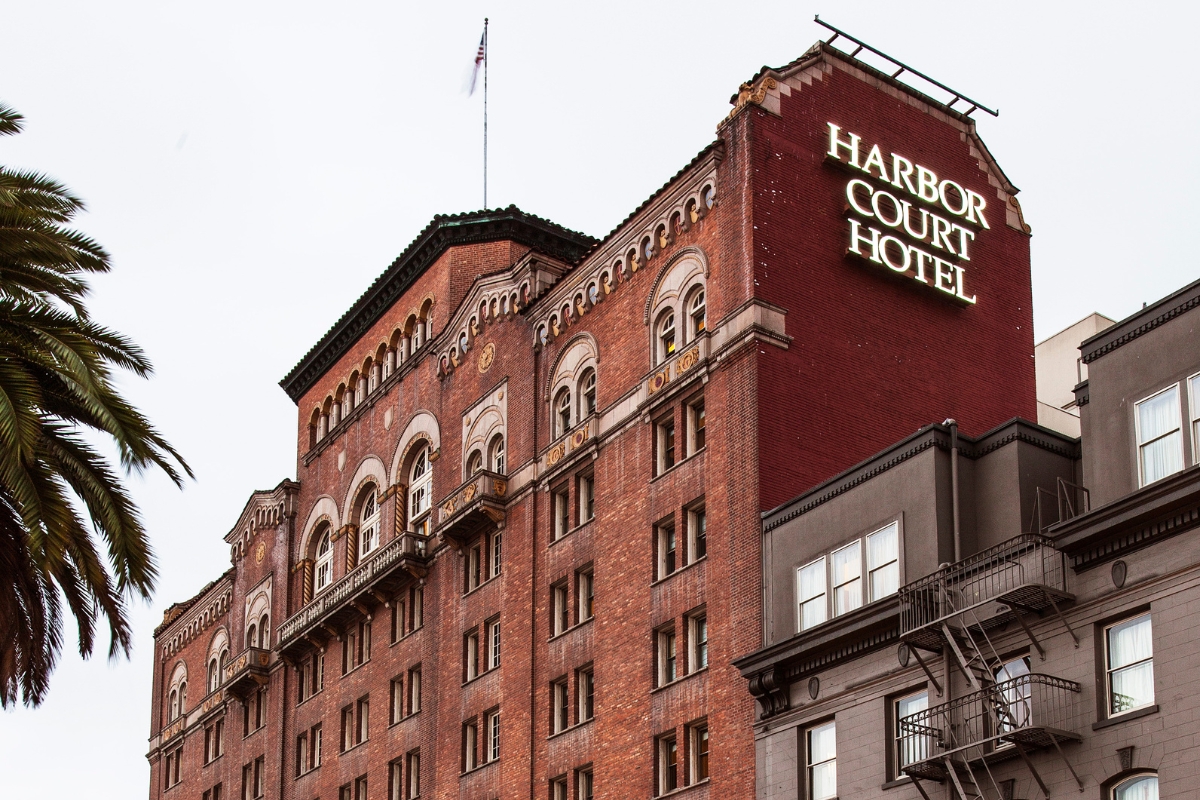
In the heart of San Francisco’s Embarcadero district resides a building that once served as a sanctuary for America’s servicemen. Originally called the “Army-Navy YMCA,” this beautiful edifice spent many years hosting soldiers and sailors long before it debuted as the elegant Harbor Court Hotel. At the time of its initial debut during the early 20th century, the surrounding Embarcadero neighborhood had become the epicenter for a massive commercial shipping operation. Hundreds of merchant vessels regularly docked along Embarcadero’s sprawling piers, offloading countless goods transported from all around the globe. In addition, Embarcadero had emerged as a major disembarkation point for military personnel scheduled to end their terms of enlistment. As a result, the Young Men’s Christian Association—more commonly referred to as the “YMCA”—generously decided to construct an eight-story structure that could provide extra housing for those individuals. Work then began on the nascent apartment complex shortly after World War I, taking several months in total to finish. Gorgeous Spanish Colonial-inspired aesthetics came to define its brilliant exterior façade, such as wide arched entryways, detailed terracotta carvings, and stunning clay tile roofing. When the Army-Navy YMCA finally opened in 1926, it was thus among the most breathtaking sights standing in the entire Embarcadero.
With 400 rooms—each modestly furnished with bunk beds and shared bathrooms—the building offered affordable lodging, meals, and a sense of community to thousands of young men navigating the uncertain transition to civilian life. Inside its walls, camaraderie flourished. Soldiers gathered in common rooms to write letters back home, play cards, or attend dances and social events. The basement pool echoed with laughter and splashes, while the gymnasium upstairs hosted boxing matches and basketball games. Chaplains and counselors were even on hand to offer guidance, and bulletin boards brimmed with job postings and educational opportunities. Indeed, the Army-Navy YMCA was a place where discipline met dignity, where weary travelers found rest, and where the spirit of postwar America—resilient, hopeful, and industrious—was palpable. But the Embarcadero area underwent significant changes as the decades passed, especially once the country was demobilized in the wake of World War II. The rise of newer urban structures throughout the mid-20th century cast a shadow over the entire waterfront, which isolated the building from other areas of the neighborhood. In consequence, the once-proud Army-Navy YMCA began to fade into the background, its architectural beauty hidden.
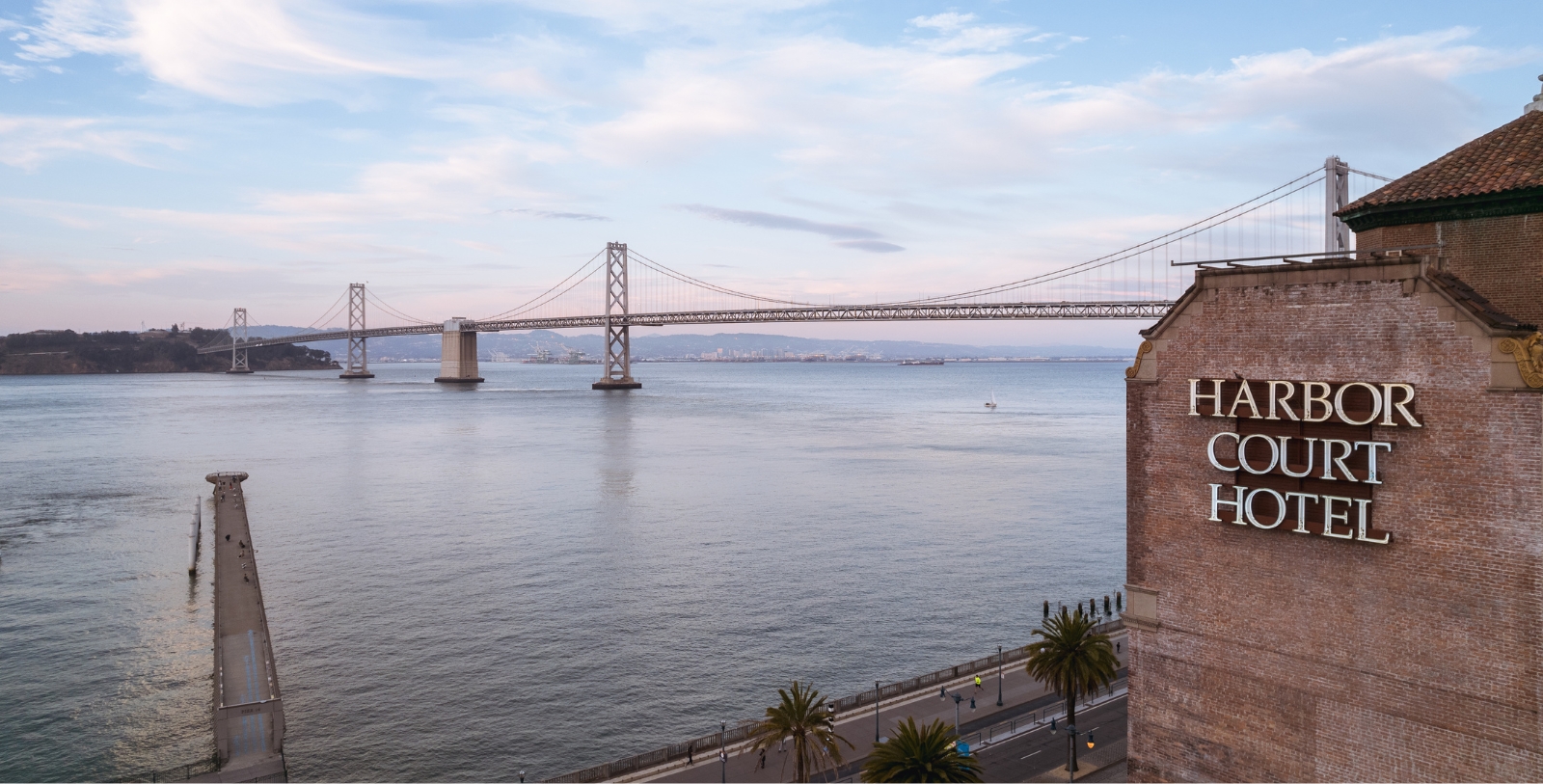
The turning point for the building’s future arrived when new owners acquired the site in 1989. Their vision was bold: to transform the aging structure into a boutique hotel that honored its historical roots. This historic renovation proceeded to diligently preserve the building’s original architectural elements, including its red-brick exterior and maritime-inspired design cues. Then in 2015, Pebblebrook Hotel Trust (with full ownership control), ushered in an even more prosperous era of style and service. For instance, a multimillion-dollar renovation started three years later that further elevated the hotel’s aesthetic, blending tech-savvy amenities with urban elegance. More importantly, the project emphasized panoramic views, sleek interiors, and a vibrant social atmosphere. Known as the “Harbor Court Hotel” today, the building now offers a spectacular series of facilities, including thoughtfully curated guestrooms and incredible culinary experiences. Many of the buildings developed in front of the structure have since been dismantled, giving the Harbor Court Hotel direct access to the majestic San Francisco Bay. From its origins as a postwar refuge to its current role as a stylish luxury destination, Harbor Court Hotel truly embodies the spirit of San Francisco: dynamic, diverse, and culturally vibrant.
-
About the Location +
Stretching along San Francisco’s northeastern waterfront, the historic Embarcadero district is more than a scenic boulevard—it is a living chronicle of the city’s maritime, architectural, and civic evolution. Indeed, the wider history of Embarcadero reflects the dynamic interplay between infrastructure, public policy, and community vision. However, this now-iconic section of shoreline appeared very differently in the middle of the 19th century. Yerba Buena Cove, a natural inlet, extended inland from Clark’s Point near Telegraph Hill to Rincon Point. As the city grew during the wider California Gold Rush though, the cove was gradually filled to accommodate expanding maritime and commercial needs. By the late 1800s, a massive seawall project had thus begun to reshape the entire inlet, in turn laying the foundation for what would become the Embarcadero. The construction of the Embarcadero Seawall—itself a three-mile-long rock and concrete barrier—was a monumental engineering feat. Completed in stages from the 1860s to the 1920s, it enabled the development of piers and wharves that supported San Francisco’s thriving port economy. In consequence, the area rapidly emerged as an integral regional hub for commercial shipping, with the San Francisco Belt Railroad specifically servicing industries positioned right next to the Embarcadero. The most notable event to affect the growth of the community around the Embarcadero was the ornate Ferry Building, which debuted in 1898. Designed in the gorgeous Beaux-Arts style, the Ferry Building acted as the main transit center for the countless laborers working around the Embarcadero. As a result, the entire district surrounding the Embarcadero had evolved into a bustling corridor of maritime activity at the start of the 20th century, with streetcars, longshoremen, and ferry passengers converging daily on its main thoroughfare, Market Street. Dozens of new buildings subsequently debuted as well, representing the incredible wealth that passed through Embarcadero on a regular basis.
Now known informally as the “Embarcadero,” the region bordering the waterfront was thus among San Francisco’s most famous neighborhoods in the decades that followed. However, significant changes started to affect the district after World War II. For instance, the Embarcadero Freeway—a double-decker elevated highway—was constructed as part of California State Route 480 in 1959. Intended to connect the Bay Bridge to the Golden Gate Bridge, it instead became a divisive structure, physically and symbolically severing the city from its cherished coast. Public opposition was fierce, and the freeway became a symbol of urban planning gone awry. Then in 1989, the Loma Prieta earthquake severely damaged the structure, resulting in its eventual demolition some two years later. The city subsequently launched the Waterfront Transportation Projects Office (WTPO), initiating a decade-long planning process involving multiple agencies, community input, and design consultants. The vision was ambitious: a tree-lined boulevard with bicycle lanes, pedestrian promenades, public art, and restored transit connections. The Embarcadero Center, designed by John Portman, added a distinctive Brutalist architectural flair to the area. Its office towers, hotels, and retail spaces contributed to the mixed-use vibrancy of the neighborhood. The Ferry Building—restored in the early 2000s—became a marketplace highlighting local artisans, farmers, and chefs, blending historic preservation with contemporary culture. Public art and cultural programming flourished, too. Events like farmers’ markets, outdoor concerts, and seasonal festivals turned the Embarcadero into a year-round destination. Recent initiatives, such as the Big Art Loop, have even brought large-scale sculptures and installations to the shoreline, further enhancing its role as a civic and cultural hub. The Embarcadero’s story is one of reinvention, representing San Francisco’s greater resilience and creativity. It acts not only as a testament to the city’s maritime heritage but as a model of urban renewal driven by civic engagement.
-
About the Architecture +
When construction on the Army-Navy YMCA first began after World War I, the greater YMCA chose Spanish Colonial Revival style architecture as inspiration to mold its appearance. Also known as “Spanish Eclectic,” Spanish Colonial Revival-style architectural form is a representation of themes typically seen in early Spanish colonial settlements. Original Spanish colonial architecture borrowed its design principles from Moorish, Renaissance, and Byzantine forms, which made it incredibly decorative and ornate. The general layout of those structures called for a central courtyard, as well as thick stucco walls that could endure Latin America’s diverse climate. Among the most recognizable features within those colonial buildings involved heavy carved doors, spiraled columns, and gabled red-tile roofs. Architect Bertram Goodhue was the first to widely popularize Spanish Colonial architecture in the United States, spawning a movement to incorporate the style more broadly in American culture at the beginning of the 20th century. Goodhue received a platform for his designs at the Panama-California Exposition of 1915, in which Spanish Colonial architecture was exposed to a national audience for the first time. His push to preserve the form led to a revivalist movement that saw widespread use of Spanish Colonial architecture throughout the country, specifically in California and Florida. Spanish Colonial Revival-style architecture would reach the height of its popularity during the early 1930s, although a few American businesspeople continued to embrace the form well into the latter half of the 20th century.