






Receive for Free - Discover & Explore eNewsletter monthly with advance notice of special offers, packages, and insider savings from 10% - 30% off Best Available Rates at selected hotels. 
history
Discover the Arizona Inn, which was founded by Arizona’s first congresswoman, Isabella Greenway.
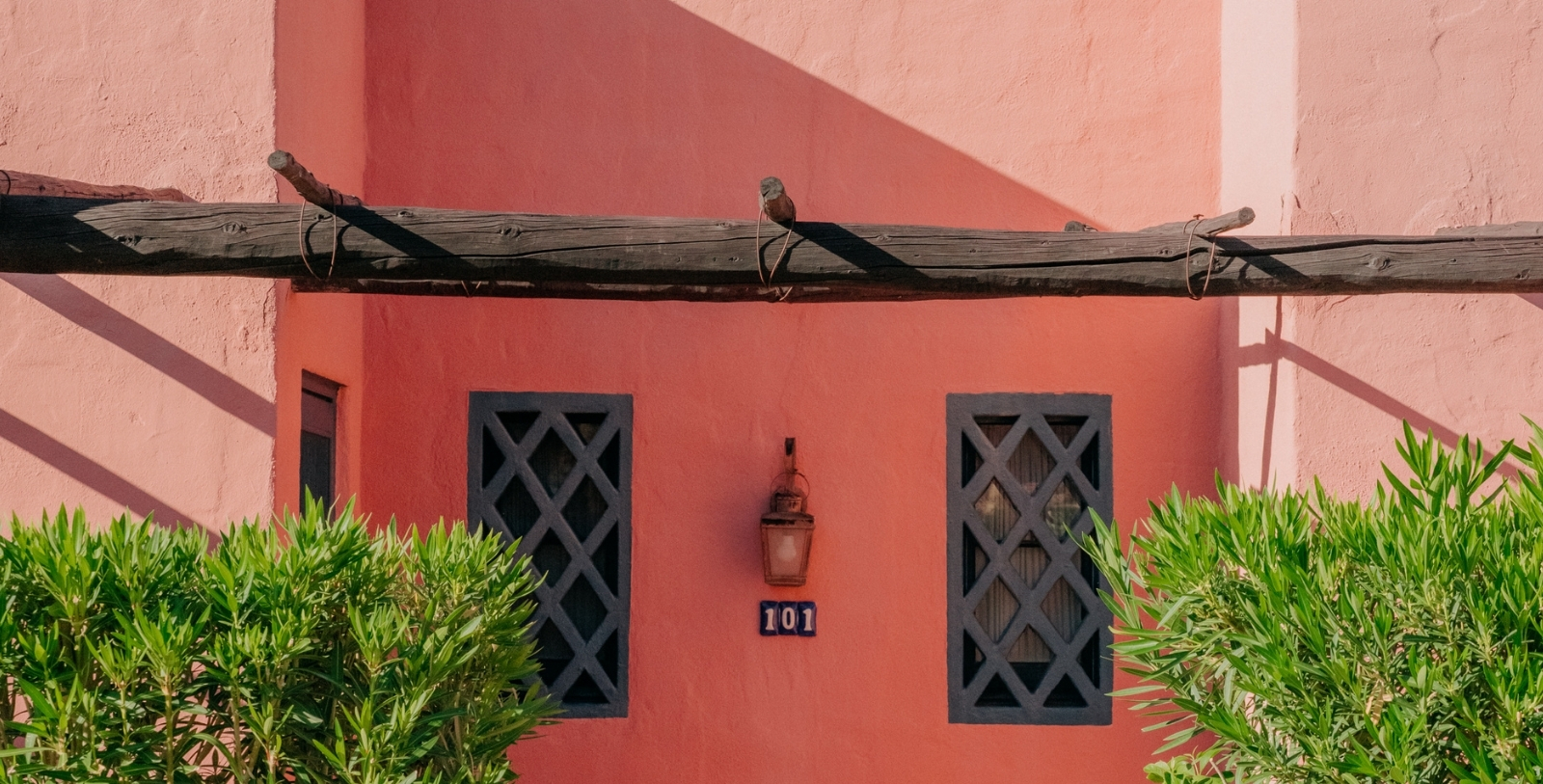
In the winter of 1930, Isabella Greenway brought life to a destination that would become one of Arizona’s most enduring landmarks: the Arizona Inn. Greenway, already a prominent figure in national and state politics, had long understood both the therapeutic power of the Sonoran landscape and the need for employment among disabled veterans recovering from the lingering effects of World War I, particularly those convalescing in Tucson from mustard gas injuries. Her response to those challenges was both entrepreneurial and deeply humane, culminating in the creation of a “simple, home-like, cottage hotel” that sought to combine comfort, elegance, and meaningful purpose in every facet of its character. Construction of the inn subsequently began on land that Greenway had developed at the northwest corner of the site two years earlier. She commissioned architect Merritt Starkweather to design the main building in a Spanish Colonial Revival style that echoed the vernacular architecture already gaining prominence in the Southwest. The structure featured pink stucco walls and striking blue trim, colors reflecting Greenway’s own personal tastes, and served as the architectural anchor for the larger complex that would soon rise around it. Landscaper James Oliphant shaped the surrounding grounds with native Arizona plants arranged to soften the desert environment into lush, welcoming gardens that invited leisure and contemplation. The Arizona Inn opened its doors that December with a dinner dance attended by couples from the nearby University of Arizona.
Although the nation was deep in the Great Depression, Greenway nonetheless operated the inn as a sanctuary from the wider economic turbulence. Early guests often arrived by train carrying steamer trunks, prepared for extended stays that might stretch across weeks or even months. The inn’s initial offerings included 22 rooms housed within cottages and casitas, each arranged to ensure privacy, tranquility, and unfettered exposure to the desert’s brilliant light—three guiding principles Greenway emphasized from the outset. As word spread about Tucson’s climate and the inn’s comforting elegance, the Arizona Inn attracted members of America’s social and political elite. Indeed, notable guests soon included the Rockefellers, Roosevelts, and Kennedys, as well as celebrities like Katharine Hepburn and Spencer Tracy. Their presence helped cement the inn’s reputation as a discreet retreat and cultural fixture capable of adapting to rapidly changing times. Even as famous visitors passed through quietly, the inn remained deeply connected to its origins in service and community, especially through the veterans whose dedication and spirit helped shape its identity. Throughout the 1930s and 1940s, Greenway continued expanding and refining the Arizona Inn. Among the buildings she initially had commissioned were several villas, which gave the inn a village-like feel. Then in 1937, the swimming pool and supporting structures were constructed, providing recreational amenities that capitalized on Tucson’s warm climate. Furthermore, the inn built an annex to house military personnel during World War II, a gesture that upheld Greenway’s ongoing commitment to the nation’s service members.
After the war, the annex transitioned through phases of staff housing and guest accommodation, evolving with the needs of its visitors. Nevertheless, the inn remained under the watchful care of her family following her death in 1953, with each generation maintaining a delicate balance between preservation and modernization. Renovations conducted in the 1970s introduced air conditioning, updated dining spaces, and a remodeled main building, while the decision to operate year-round marked a strategic shift toward accommodating Tucson’s growing tourism economy. Rehabilitation work done to the accompanying Spalding House decades later added nine new guestrooms, demonstrating how the inn could keep expanding without sacrificing its architectural cohesion or historical integrity. Listed in the U.S. National Register of Historic Places, the Arizona Inn remains a harmonious blend of desert flora, intimate courtyards, and pink stucco walls that echo the original vision of a peaceful desert sanctuary. Greenway’s guiding ideals of privacy, quiet, and sunshine continue to permeate the atmosphere just as they did when the inn first welcomed guests in 1930. Her groundbreaking political work and her commitment to veterans’ welfare all shaped her approach to hospitality. The inn stands not only as a hotel, but also as a living testament to her broader legacy. It embodies her belief that a place of rest can also be a place of healing, opportunity, and community. Even now, those values endure in the attentive service and thoughtful preservation that define the current guest experience.
-
About the Location +
People have lived around modern day Tucson for the better part of four millennia, making one of the most historically occupied regions in the United States. Archeologists today believe that Paleo-Indians were among the first to settle the land, with the earliest village appearing in 2100 BC. Permanently settled horticulture followed suit, as current evidence suggests that widespread farming was commonplace by 1200 BC. The farming became increasingly more intricate, with a vast canal system appearing to irrigate the various fields. Spanish missionaries led by Eusebio Francisco Kino encountered this prolific society when they arrived in the area during the late 1690s. They founded the Mission San Xavier de Bac several miles upstream from modern Tucson, the missionaries had come to spread Christianity on behalf of the Spanish Crown. The Spanish colonial settlements remained disparate until Hugo Oconór commissioned the construction of a military fort called the “Presidio San Agustín del Tucsón” in 1775. Constructed upon what is now the Pima County Courthouse, the citadel protected the nascent villages in the area from raids by mounted Apache warriors. Peace eventually fell upon the area, with a small town forming around the base of the fort. Its inhabitants took to calling it simply “Tucsón” after a native word used to describe the area.
Tucsón remained an outpost for settlers venturing north into the frontier after the settlement became a part of Mexico in 1821. But during the Mexican American War of 1846 to 1848, the town was briefly under American control when General Philip St. George Cooke captured Tucsón with a battalion of Mormon volunteers. Nevertheless, Cooke returned the settlement over to Mexican authority toward the end of the conflict, as he made his way west in the direction of California. He specifically constructed a famous wagon road that became one of the most important routes linking Tucsón to the Pacific Coast. Thousands of hopeful Americans flooded the route as they stampede west at the onset of the California Gold Rush. Yet, the town remained in Mexico for the next few years, despite the rest of Arizona falling under American jurisdiction. It was not until the U.S. ambassador to Mexico, James Gadsden, arranged to purchase all the land south of the Gila River that Tucsón formally became a part of the United States. Known as the “Gadsden Purchase,” the land sale sought to provide more room in which the build an American-run transcontinental railroad. Even though the transaction took place in 1854, the first American officials—and their military escorts—did not arrive until two years later. Soon enough, the new inhabitants were referring to the town as “Tucson”—an anglicized version of its name. The military attaché also established its own base known as Fort Lowell, which protected travelers as they made their way into the city.
Tucson’s proximity along the Cooke Wagon Trail caused its popularity to gradually grow to the point where Arizona’s territorial legislature incorporated it as a city in 1877. Its relative remoteness on the American frontier made it the target of countless criminal acts by dangerous outlaws. Tucson quickly epitomized the caricature of the American “Wild West.” Some of the most common crimes involved stagecoach robberies, with the most notable involving the renegade William Whitney Brazelton. Brazelton held up two stagecoaches a few miles outside of Tucson in the summer of 1878. Pima county Sherriff Charles A. Shibell had to organize an armed posse just to apprehend the violent criminal. A shootout eventually transpired south along the Santa Cruz River that saw Brazelton killed. More famous shootouts occurred in Tucson between law enforcement and roving bands of fugitives. One of the greatest gun fights to occur within the city limits is known to history as the “Earp-Clanton Tragedy.” In 1882, Morgan Earp, brother of the legendary Deputy U.S. Marshal Wyatt Earp, was assassinated by the bandit Frank Stilwell and his gang. In vengeance, Wyatt Earp gathered his other brother Virgil Earp and a few friends to track down the rebellious Stilwell. In short order, they managed to find Stilwell lying in wait to kill Virgil at the steps of the Tucson railroad station. Surprising Stilwell, Wyatt Earp and his group killed the cowboy and most of his band before leaving the territory for California.
Tucson had cast aside its violent reputation toward the end of the 1800s, emerging as one of the most attractive places to live in the southeastern United States. The railroads influenced the transformation, for they better connected the city with its surrounding communities. One of the greatest signs that the city was becoming pacified was the creation of the University of Arizona just outside of Fort Lowell. By 1900, the population of Tucson had increased to nearly 7,000 with some five percent immigrating from Asia. That number had practically doubled by the time Arizona officially joined the union in 1912. By the mid-20th century tens of thousands had relocated to the economically vibrant Tucson. For a time, Tucson was the largest settlement in the state, surpassing Phoenix in its size until the 1920s. The city continued to play an important role in Arizona’s history, acting as the commercial center for the southern part of the state. Driving much of this growth was Hughes Aircraft, which moved to Tucson in 1951. Employing some 14,000 residents, the company did much to diversify the local economy. Now known as Raytheon, the company still occupies the same facility it first inhabited several decades ago. It also hosted a massive military hospital for veterans sponsored by the U.S. Veterans Administration. In recent years, a prosperous optics industry has also appeared within the city that gave Tucson the nickname of “Optics Valley.” Today, the City of Tucson is one of the most culturally vivacious places in the country. It is filled with countless cultural attractions of world renown, such as the Reid Park Zoo, the Tucson Botanical Gardens, and the Pima Air & Space Museum. The historic Mission San Xavier del Bac is still located just outside of the city, which the U.S. Department of the Interior designated as a National Historic Landmark.
-
About the Architecture +
When architect Merritt Starkweather began designing the Arizona Inn on behalf of Isabella Greenway, he chose Spanish Colonial Revival-style architecture as the source of his inspiration. Also known as “Spanish Eclectic,” this architectural form is a representation of themes typically seen in early Spanish colonial settlements. Original Spanish colonial architecture borrowed its design principles from Moorish, Renaissance, and Byzantine forms, which made it incredibly decorative and ornate. The general layout of those structures called for a central courtyard, as well as thick stucco walls that could endure Latin America’s diverse climate. Among the most recognizable features within those colonial buildings involved heavy carved doors, spiraled columns, and gabled red-tile roofs. Architect Bertram Goodhue was the first to widely popularize Spanish Colonial architecture in the United States, spawning a movement to incorporate the style more broadly in American culture at the beginning of the 20th century. Goodhue received a platform for his designs at the Panama-California Exposition of 1915, in which Spanish Colonial architecture was exposed to a national audience for the first time. His push to preserve the form led to a revivalist movement that saw widespread use of Spanish Colonial architecture throughout the country, specifically in California and Florida. Spanish Colonial Revival-style architecture reached its zenith during the early 1930s, although many people continued to embrace the form well into the late 20th century.
-
Famous Historic Guests +
Spencer Tracey, actor known for such role sin Adam’s Rib, Woman of the Year, and Guess Who’s Coming to Dinner.
Katharine Hepburn, actress known for her roles in The African Queen and Woman of the Year.
Clark Gable, actor known for his roles in It Happened One Night, Mutiny on the Bounty, Gone with the Wind.
Gary Cooper, actor known for such roles in High Noon, Sergeant York, and For Whom the Bell Tolls.
Bette Davis, actress known for her roles in All About Eve, Jezebel, and What Ever Happened to Baby Jane?
Cary Grant, actor known for such roles in To Catch a Thief, Charade, and North by Northwest.
Bing Crosby, singer and actor known for his roles in Going My Way and White Christmas.
Frank Sinatra, singer and actor part of the famous Rat Pack known for selling 150 million records worldwide.
Jean Simmons, actress known for her roles in films like Hamlet, Spartacus, and Guys and Dolls.
John Wayne, actor known for his roles in The Man Who Shot Liberty Valance, True Grit, and The Longest Day.
-
Film, TV, and Media Connections +
Petrocelli: Any Number Can Die (1976)
Revenge of the Nerds (1984)
Thunder Alley (1985)
Catalina Trust (2000)
-
Women in History +
Isabella Greenway: Isabella Greenway’s life unfolded as one of the most compelling American stories of the early 20th century, marked by resilience, enterprise, and a deep commitment to public service. Born Isabella Dinsmore Selmes on March 22, 1886, at the historic Dinsmore Farm in Boone County, Kentucky, she entered a world rooted in family tradition yet shaped by the rapidly changing American frontier. Her parents, Tilden Russell Selmes and Martha “Patty” Flandrau Selmes, soon moved the family to a ranch in Dakota Territory, where the harsh winters, vast landscapes, and rugged community left a lasting imprint on young Isabella. The family’s ranch lay along the same rail line as Theodore Roosevelt’s ranches, and the Selmes and Roosevelt families developed a close friendship that would influence Isabella’s life for decades to come. After a series of devastating blizzards in 1886–87 destroyed their cattle operations, the Selmes family relocated to St. Paul, Minnesota, and later to various family residences following her father's death in 1895. Isabella’s mother supported them through resourceful work, while Isabella was educated in St. Paul and at elite schools in New York City. It was during her schooling in New York that she became close friends with Eleanor Roosevelt, a bond that endured throughout both women's lives.
In 1905, she married Robert H. Munro Ferguson, a former Rough Rider and close associate of Theodore Roosevelt. As Robert struggled with tuberculosis, the couple moved west to find a healthier climate. They had two children, and Isabella’s role expanded beyond that of a frontier wife as she became active in community work. More specifically, Greenway served on various school boards and even participated in wartime efforts such as the Women’s Land Army of New Mexico. Her husband’s lengthy illness ended with his death in 1922, leaving Isabella a widowed mother facing new challenges. Her second marriage to another Roosevelt friend, John Campbell Greenway, brought her to Arizona, where the couple had one son. John’s death only a few years later again reshaped Isabella’s life. Rather than retreating from the public, she expanded her entrepreneurial and civic activities. She founded the Arizona Hut, a furniture workshop created to provide employment for disabled veterans, and in 1930 opened the Arizona Inn in Tucson, a beautifully designed resort that reflected her aesthetic vision and business acumen.
Her political rise came as naturally as her business ventures. For instance, she campaigned energetically for Franklin Roosevelt during the 1932 presidential race and gained national attention when she seconded his nomination at the Democratic National Convention. That same year, after the resignation of Arizona congressman Lewis Douglas, she was elected to fill the vacancy. In doing so, Greenway became Arizona’s first female member of Congress. She won re‑election in her own right and served until 1937, aligning with New Deal policies while also speaking candidly when she felt Roosevelt’s administration had strayed from its ideals. Though she retired from politics after her marriage in 1939 to industrialist Harry Orland King, Isabella continued to exert influence in civic life. She remained active in community organizations, veterans’ advocacy, and the stewardship of the Arizona Inn. Her friendship with Eleanor Roosevelt endured, too, enriched by decades of shared experience, political collaboration, and personal candor. Isabella Greenway died at the Arizona Inn she had built in 1953, leaving behind a legacy of public service, innovation, and pioneering spirit.